
Aviation Meteorology

Master Weather Science for Safe & Smart Flying

Enroll Now

Aviation Meteorology

Master Weather Science for

Safe & Smart Flying

Enroll Now

Format

Format

Online + Live Interactive Sessions

Online + Live Interactive Sessions

Eligibility

Eligibility

Aspiring CPL Students & Pilots

Aspiring CPL Students & Pilots

Duration

Duration

4–6 Weeks Intensive Training

4–6 Weeks Intensive Training

Deadline

Deadline

Enrollments Open Apply Fast

Enrollments Open Apply Fast

About Aviation Meteorology

About Aviation Meteorology

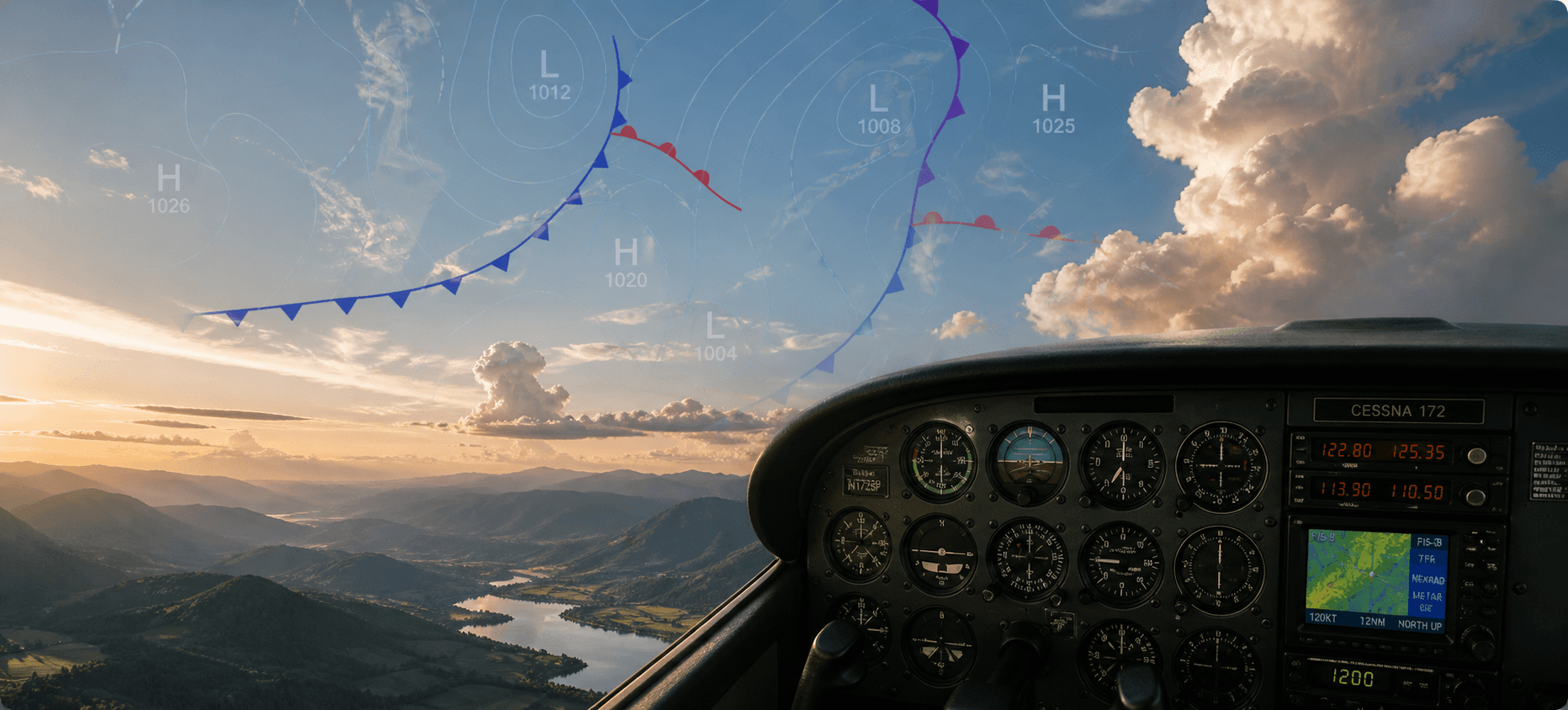
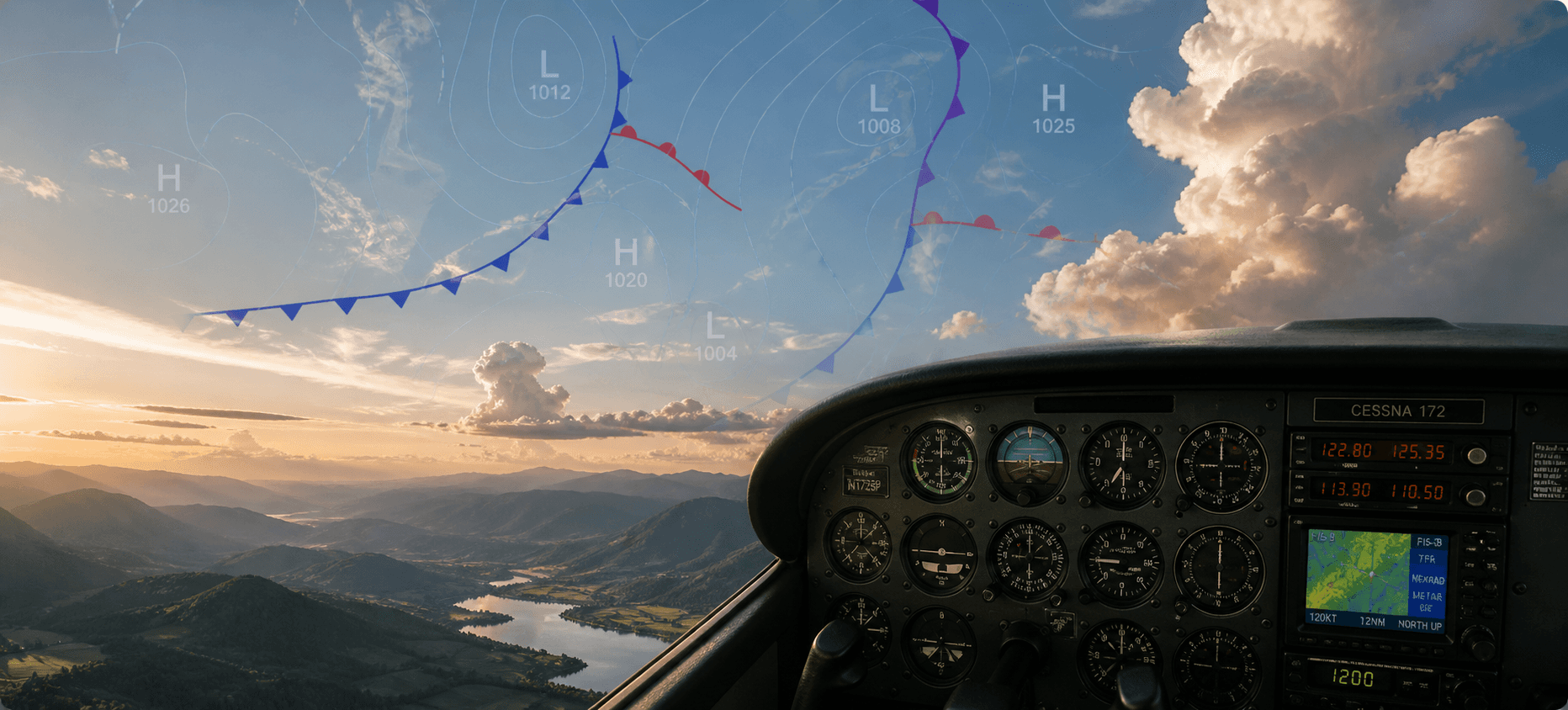
Aviation Meteorology focuses on atmospheric science and its direct impact on flight safety, aircraft performance, and operational decision-making. It is a high-weightage DGCA subject that requires both conceptual understanding and practical interpretation skills.

This course covers the structure and composition of the atmosphere, pressure systems, wind patterns, and frontal systems. You will gain a clear understanding of cloud formation, precipitation, turbulence, and other weather phenomena that directly affect flight operations.

Special emphasis is given to decoding METAR, TAF, SIGMET, and aviation weather charts, enabling you to interpret real-world weather data effectively. You will also learn to identify hazards such as icing, thunderstorms, and wind shear.

DGCA is increasingly focusing on practical weather interpretation rather than theoretical definitions. This course ensures that you develop the ability to analyze weather conditions, assess risks, and make informed flight decisions confidently.

What You’ll Get

This course is built to give you everything required to clear Meteorology confidently:

Concept-based Video Lectures

Structured Notes (Exam-Focused)

Previous Year Questions (PYQs)

Practice Tests & Mock Exams

Doubt Support

& Guidance

Doubt Support & Guidance

What you’ll learn

Module 01

Atmospheric Fundamentals

Build a strong foundation by understanding the structure and composition of the atmosphere.

• Layers of atmosphere (Troposphere, Stratosphere, etc.)
• Temperature variations and vertical distribution

• ISA (International Standard Atmosphere)
• Lapse rates and temperature gradients

Module 02

Pressure & Wind Systems

Understand how pressure differences create wind and influence weather patterns.

• Pressure systems (highs, lows, ridges, troughs)
• Pressure measurement and altimetry basics

• Wind formation and pressure gradient force
• Coriolis force and geostrophic wind
• Local and global wind systems

Module 03

Clouds & Weather Phenomena

Learn how clouds form and what they indicate for flight conditions.

• Cloud formation processes
• Cloud classification (low, medium, high, vertical)

• Precipitation types
• Visibility and fog formation
• Turbulence basics

Module 04

Aviation Weather Reports & Charts

Develop the ability to decode real aviation weather data.

• METAR and TAF decoding
• SIGMET and AIRMET
• Synoptic charts and weather maps
• Wind and temperature charts
• Upper air charts

Module 05

Weather Hazards in Aviation

Identify and manage hazardous weather conditions affecting flights.

• Thunderstorms and cumulonimbus clouds

• Icing types and effects

• Wind shear and microbursts
• Clear air turbulence (CAT)
• Operational impact of severe weather

Module 06

Weather Interpretation & Flight Application

Apply meteorology knowledge to real flight planning and decision-making.

• Weather briefing and analysis
• Route weather assessment
• Alternate planning
• Go/No-Go decision making
• In-flight weather awareness

Sample Question Paper

Sample Question Paper

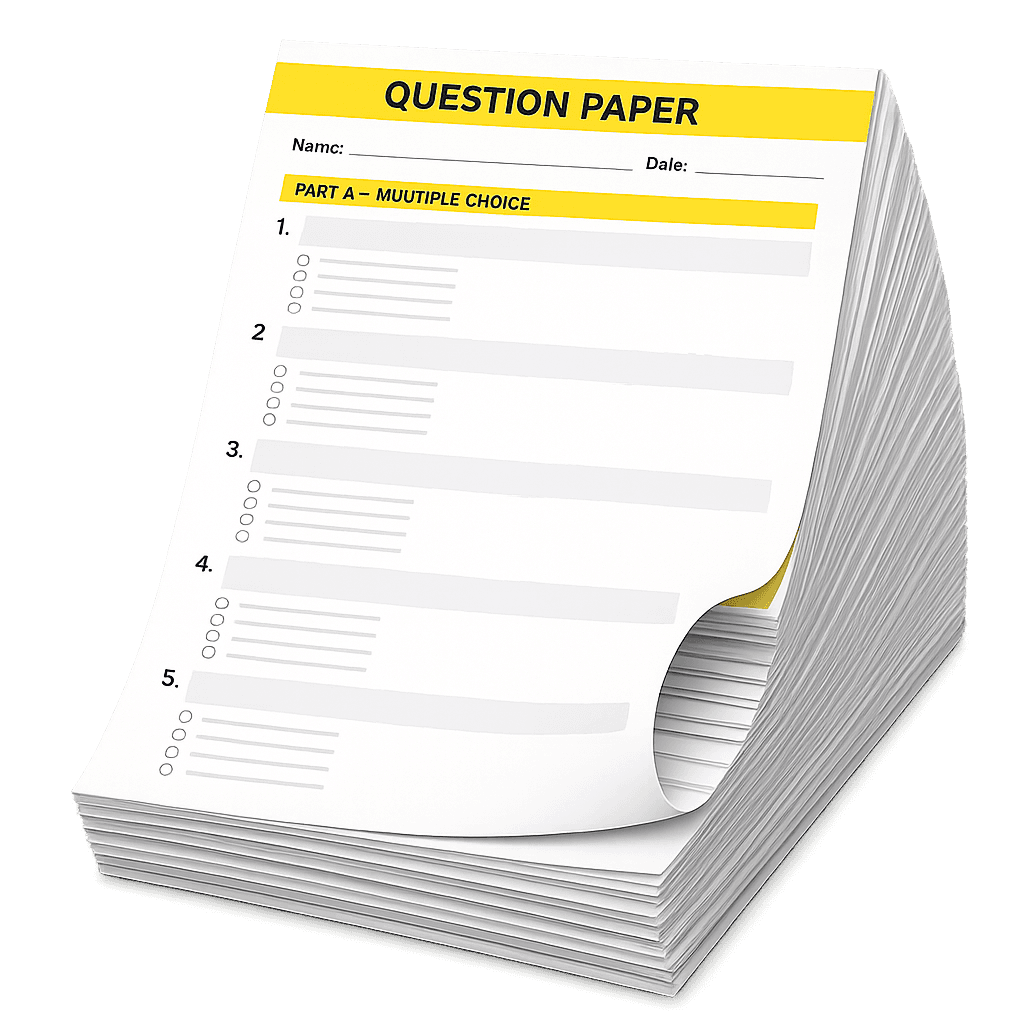
Explore our sample question papers to understand the exam pattern, question types, and difficulty level.

Explore our sample question papers to understand the exam pattern, question types, and difficulty level.

Coming Soon

Want Sample paper ?

Want
Sample paper ?

FAQ’s

Is Aviation Meteorology difficult for DGCA exams?

Aviation Meteorology can feel challenging initially because it involves both concepts and interpretation. However, with the right approach—focusing on understanding rather than memorization—it becomes one of the most scoring subjects. This course simplifies complex topics and helps you build clarity step by step.

Does this course cover the complete DGCA syllabus?

Yes, the course is fully aligned with the DGCA CPL/ATPL syllabus. It covers everything from atmospheric basics and ISA to advanced topics like weather charts, METAR/TAF decoding, and aviation hazards.

Will I learn how to decode METAR and TAF properly?

Absolutely. The course includes detailed training on METAR, TAF, SIGMET, and aviation weather charts. You’ll learn not just decoding, but also how to interpret them for real flight planning and decision-making.

Are previous year questions (PYQs) included?

Yes, PYQs are an integral part of the course. You’ll practice DGCA-style questions along with concept-based explanations to understand patterns and improve accuracy.

Is this course more theory-based or practical?

The course is designed to be highly practical. While concepts are explained clearly, major emphasis is placed on real-world application—like weather interpretation, hazard identification, and flight decision-making.

How is this course different from other Meteorology classes?

Most courses focus on theory and memorization. This course focuses on concept clarity + application, which is exactly what DGCA now emphasizes. You’ll learn how to think like a pilot, not just answer questions.

Will this help me in actual flying, not just exams?

Yes. The course is designed to bridge the gap between exams and real flying. You’ll learn how to analyze weather conditions, assess risks, and make safe decisions—skills that are essential in the cockpit.

How long does it take to complete the course?

The duration depends on your pace, but typically students complete it within a few weeks. Since the course is structured module-wise, you can learn efficiently without feeling overwhelmed.

Do I need prior knowledge of Meteorology?

No prior knowledge is required. The course starts from basics and gradually builds up to advanced topics, making it suitable for beginners as well as revision students.

Will I get doubt support if I get stuck?

Yes, dedicated doubt support is provided. You can ask questions and get guidance to ensure that no concept remains unclear.

Is this course suitable for last-minute revision?

Yes. Along with detailed lectures, the course includes structured notes and key concepts that are perfect for quick revision before exams.

What kind of questions does DGCA usually ask in Meteorology?

DGCA increasingly focuses on concept-based and interpretation-driven questions, especially from METAR/TAF, weather charts, and aviation hazards. This course is specifically designed to prepare you for that pattern.

Is Aviation Meteorology difficult for DGCA exams?

Does this course cover the complete DGCA syllabus?

Will I learn how to decode METAR and TAF properly?

Are previous year questions (PYQs) included?

Is this course more theory-based or practical?

How is this course different from other Meteorology classes?

Will this help me in actual flying, not just exams?

How long does it take to complete the course?

Do I need prior knowledge of Meteorology?

Will I get doubt support if I get stuck?

Is this course suitable for last-minute revision?

What kind of questions does DGCA usually ask in Meteorology?

Ready to Soar?

Ready to Soar?

Ready to Soar?

Join Our Pilot Training Academy!

Join Our Pilot Training Academy!

Join Our Pilot Training Academy!

Enroll Now

Copyright © 2026 Sierra Aero . All rights reserved.

Copyright © 2026 Sierra Aero . All rights reserved.

Copyright © 2026 Sierra Aero . All rights reserved.

0%
LOADING

1

1