
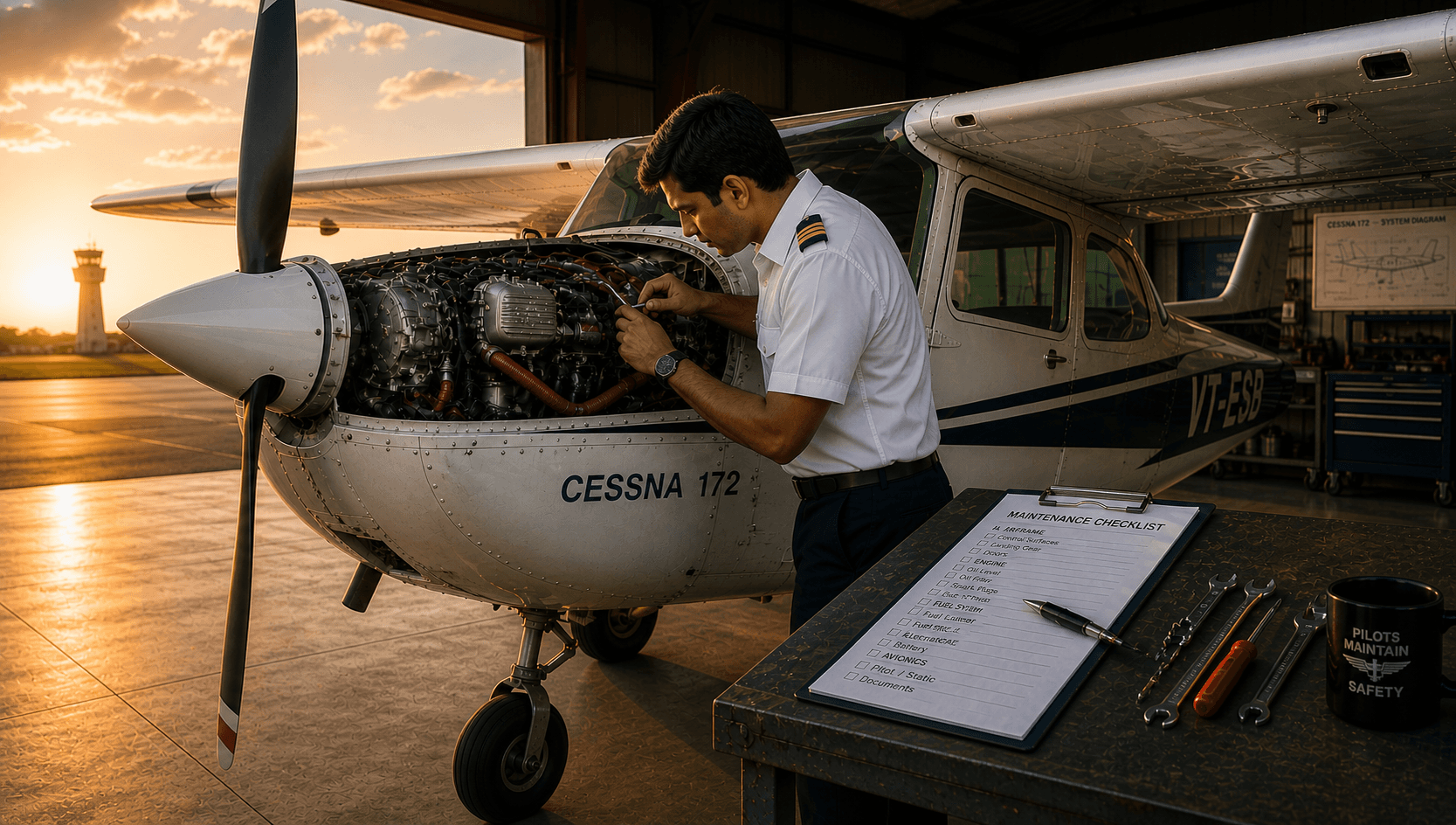
Technical General builds the fundamental understanding of aircraft design, aerodynamics, and systems that every pilot must possess. It forms the engineering base required for DGCA exams as well as future training phases like simulator sessions and airline ground school.
This course covers principles of flight, aircraft structures, and materials, along with detailed knowledge of powerplants including piston and turbine engines. You will also study aircraft instruments, electrical systems, fuel systems, and environmental control systems.
The focus is on developing conceptual clarity so that you understand how different systems interact and function during flight. This not only helps in exams but also builds confidence for technical discussions and real-world aviation scenarios.
What You’ll Get
This course is built to give you everything required to clear Technical General confidently:
Concept-based Video Lectures
Structured Notes (Exam-Focused)
Previous Year Questions (PYQs)
Practice Tests & Mock Exams
What you’ll learn
Module 01
Principles of Flight
Understand the aerodynamic forces acting on an aircraft.
• Lift, drag, thrust, weight
• Bernoulli principle
• Angle of attack
• Stall concepts
Module 02
Aircraft Structure
Learn how aircraft are designed and constructed.
• Fuselage, wings, empennage
• Materials and composites
• Stress and loads
Module 03
Wind Triangle & Heading
Build strong numerical problem-solving skills.
• Wind triangle concept
• Drift angle and heading correction
• Ground speed calculations
• Vector-based navigation
Module 04
Chart Work
Learn to read and interpret aviation charts.
• WAC charts
• En-route charts
• Terminal charts
• Approach charts
Module 05
Radio Navigation
Understand navigation using radio aids.
• ADF and NDB
• VOR and radial tracking
• DME distance measurement
• GNSS basics
Module 06
Instruments & Compass
Understand navigation instruments and errors.
• Magnetic compass principles
• Compass errors (variation & deviation)
• Gyro instruments basics
Module 07
Flight Planning
Apply navigation concepts to real operations.
• Navigation logs
• Route planning
• Fuel planning
• In-flight monitoring
Coming Soon
FAQ’s
Enroll Now